



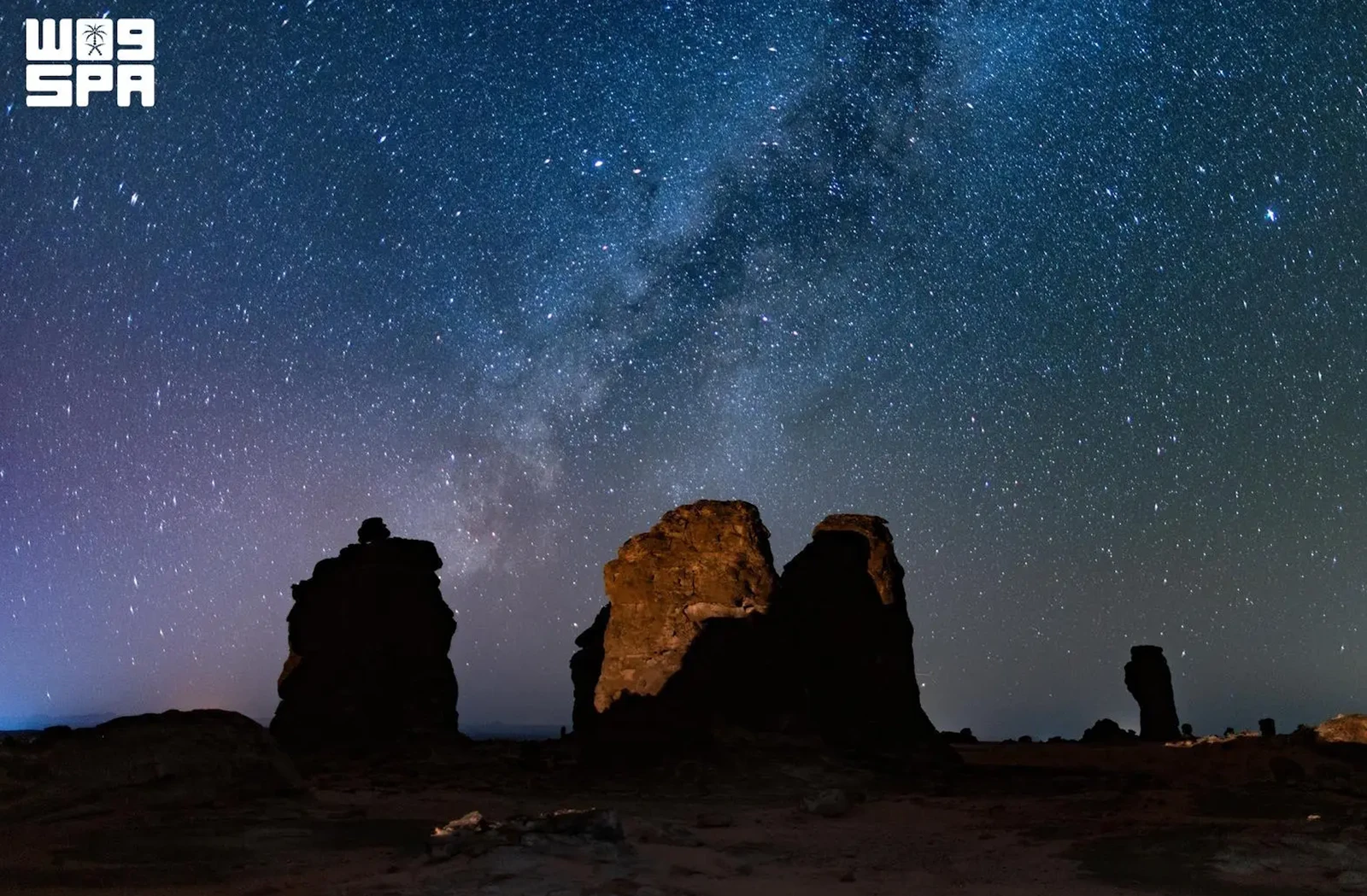
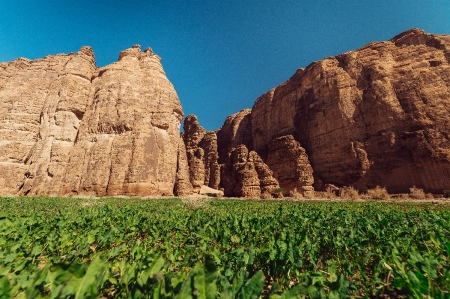
Saudi Arabia’s AlUla is a land where geology and history intertwine, offering visitors landscapes shaped over hundreds of millions of years.
From giant sandstone formations to ancient volcanic fields, its natural wonders tell the story of Earth’s past while dazzling travelers today.
Ads_responsive

Fish Rock: Desert Giant
In Wadi Al-Fann, the Fish Rock stretches nearly 200 meters, resembling a colossal sea creature stranded in the desert.
While early images sparked myths of a fossilized fish, experts confirm it was sculpted by erosion as ancient rivers carved the rock 500 million years ago.

Ads_responsive
Elephant Rock: AlUla’s Icon
Perhaps AlUla’s most iconic landmark, Elephant Rock towers 52 meters high, its “trunk” rooted in golden sands.
Unlike Hegra’s Nabataean tombs carved by humans, this giant was formed naturally by wind and water over millennia.

Ads_responsive
Sharaan Reserve: Mushroom Rocks
Within AlUla’s Sharaan Nature Reserve, mushroom-shaped rocks stand out among 1,500 square kilometers of red canyons and desert valleys.
Conservation programs are restoring native wildlife and flora, making it a haven for eco-tourism.

Ads_responsive
Face Rock: Human-Like Guardian
Near Hegra, Face Rock resembles a human head watching the desert. Best seen at sunrise or sunset, the formation glows in shifting light, offering photographers a magical scene.

Ads_responsive
The Arch & Dancing Rocks
Known as Rainbow Rock, the Arch looks like a natural sandstone bridge. In Raggasat Valley, the Dancing Rocks appear to sway together, a favorite site for hikers and dune buggy adventurers.

Ads_responsive
Volcanoes & Lava Fields
Beyond sandstone, AlUla also reveals its volcanic past. In Harrat Uwayrid and Harrat Khaybar, black lava flows, cones, and even the dramatic White and Black Volcanoes dominate the landscape.
These vast volcanic fields are among the largest in Saudi Arabia, preserving evidence of early human activity.
Ads_responsive
A Living Museum
From fossil-rich sediments to fiery lava trails, AlUla is a geological and cultural museum under the open sky.
Each formation — whether fish, elephant, or dancing rocks — reflects nature’s artistry and Saudi Arabia’s commitment to preserving its heritage while opening new frontiers for tourism.











.webp?w=1920&q=100)