


Kuwait is working towards reducing its greenhouse gas emissions by up to 15 percent by 2035, as part of its efforts to address climate change and move towards a lower-carbon economy. The Public Authority for Environment (EPA) outlined the target during the 31st United Nations Climate Change Conference (COP31), held in Antalya, Turkey.
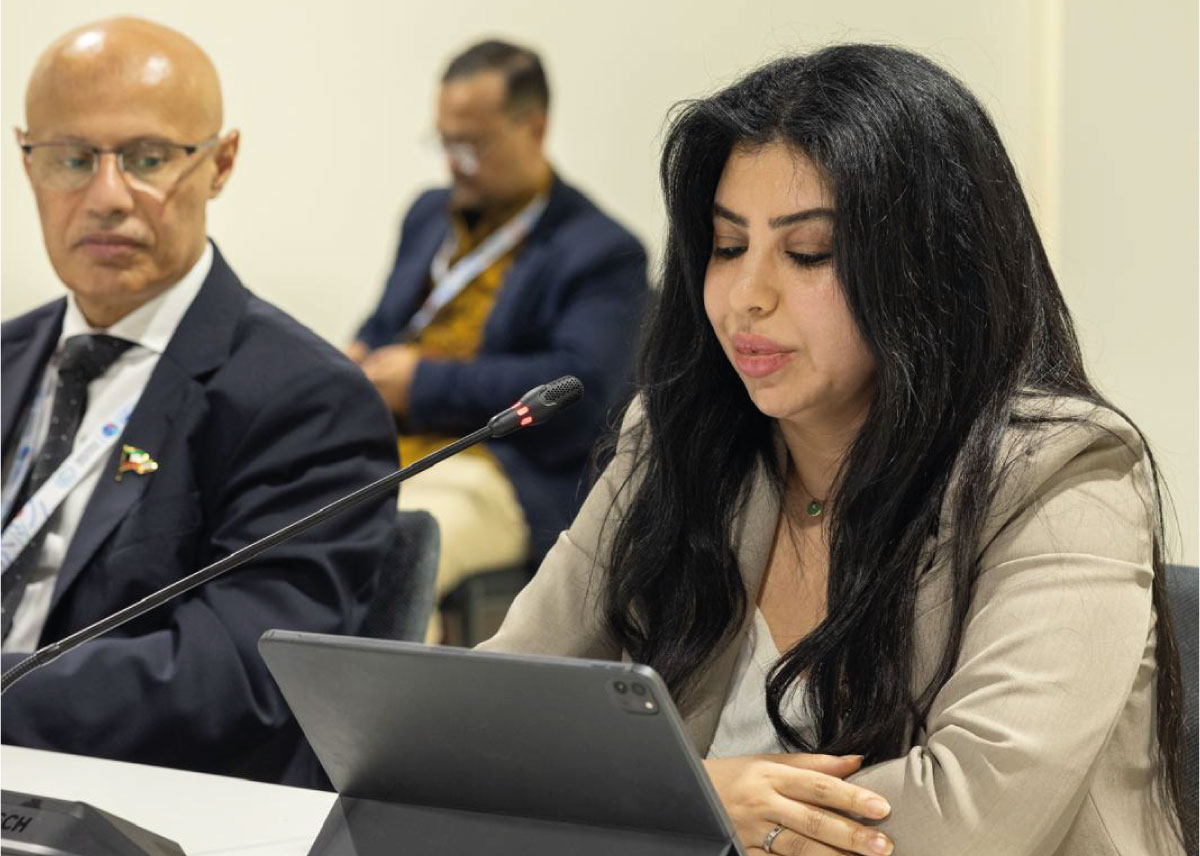
Acting EPA Director-General Nouf Behbehani, who headed Kuwait's delegation to the conference, told the Kuwait News Agency (KUNA) that the country remains committed to international climate cooperation and sustainable development. She said Kuwait had presented its national low-carbon development roadmap, approved by the Council of Ministers in 2025, which seeks to achieve carbon neutrality in key economic sectors by 2060.
The roadmap outlines several measures intended to reduce emissions while supporting the country's economic and energy requirements. These include expanding renewable energy projects, increasing solar power generation and gradually replacing heavier fossil fuels with natural gas in electricity production.
Kuwait also plans to improve energy efficiency, strengthen waste management systems and develop natural carbon sinks, including mangrove forests. These initiatives form part of a broader strategy to reduce the environmental impact of economic activities while improving the sustainability of essential infrastructure.
Behbehani said Kuwait is developing its third Nationally Determined Contribution (NDC), targeting an unconditional reduction of up to 15 percent of its total emissions by 2035. The proposed target will be supported by national projects and scientific methods designed to measure and verify progress.
The country will also continue applying the circular carbon economy approach, which focuses on reducing, reusing, recycling and removing carbon emissions. The strategy incorporates modern technologies while taking account of Kuwait's national development priorities and energy needs.
Environmental restoration was another major focus of Kuwait's participation at COP31. The delegation attended the fourth ministerial meeting of the Mangrove Alliance for Climate, where it presented progress on the country's mangrove rehabilitation programme.
Launched in 2018, the national project has been implemented in nine phases and has resulted in the planting of more than 8,000 mangrove seedlings and thousands of seeds. The programme has also helped rehabilitate approximately 3,800 square metres of land within the Jahra Nature Reserve.
Additional planting trials have been conducted at other coastal locations. According to Behbehani, mangrove trees grown under the programme have been producing seeds locally since 2022, supporting efforts to expand future cultivation using locally sourced planting materials.
Kuwait has also worked with the United Arab Emirates on mangrove restoration, resulting in the planting of approximately 4,000 seeds during 2025 and 2026. Behbehani acknowledged contributions from Oman, Bahrain and Saudi Arabia to regional environmental cooperation.
The EPA intends to strengthen domestic mangrove propagation through the marine nursery at Jahra Nature Reserve. Future work will include expanding the use of locally produced seeds and examining additional coastal sites suitable for planting.
These activities are intended to improve Kuwait's ability to adapt to climate change while protecting coastal ecosystems and biodiversity. Mangroves play an important role in supporting marine habitats and storing carbon, making their restoration part of the country's wider environmental objectives.
Behbehani also announced that the EPA has adopted a unified environmental sustainability reporting framework for government entities. The system uses measurable national indicators to improve transparency, accountability and the integration of sustainability considerations into public-sector planning and decision-making.
She stressed that international climate action must balance emissions reduction ambitions with energy security, economic stability and development priorities. She also highlighted the importance of honouring international commitments on climate finance, technology transfer and capacity building so developing countries can implement climate mitigation and adaptation programmes.
According to Behbehani, countries should retain the flexibility to choose environmental policies and technologies suited to their national circumstances. She emphasised the principles of fairness, equity and common but differentiated responsibilities in international climate cooperation, while maintaining every country's right to pursue sustainable development.
The Kuwaiti delegation also highlighted the country's international development contributions through the Kuwait Fund for Arab Economic Development. Since its establishment in 1961, the fund has helped finance 1,043 development projects in 108 countries, with total financing exceeding $22 billion.
Kuwait's climate roadmap combines longer-term emissions reduction objectives with renewable energy investment, environmental restoration and institutional reforms. The country's 2035 target and 2060 carbon neutrality ambition form part of its stated approach to addressing climate change while maintaining economic development and energy security.
Source: KUNA