

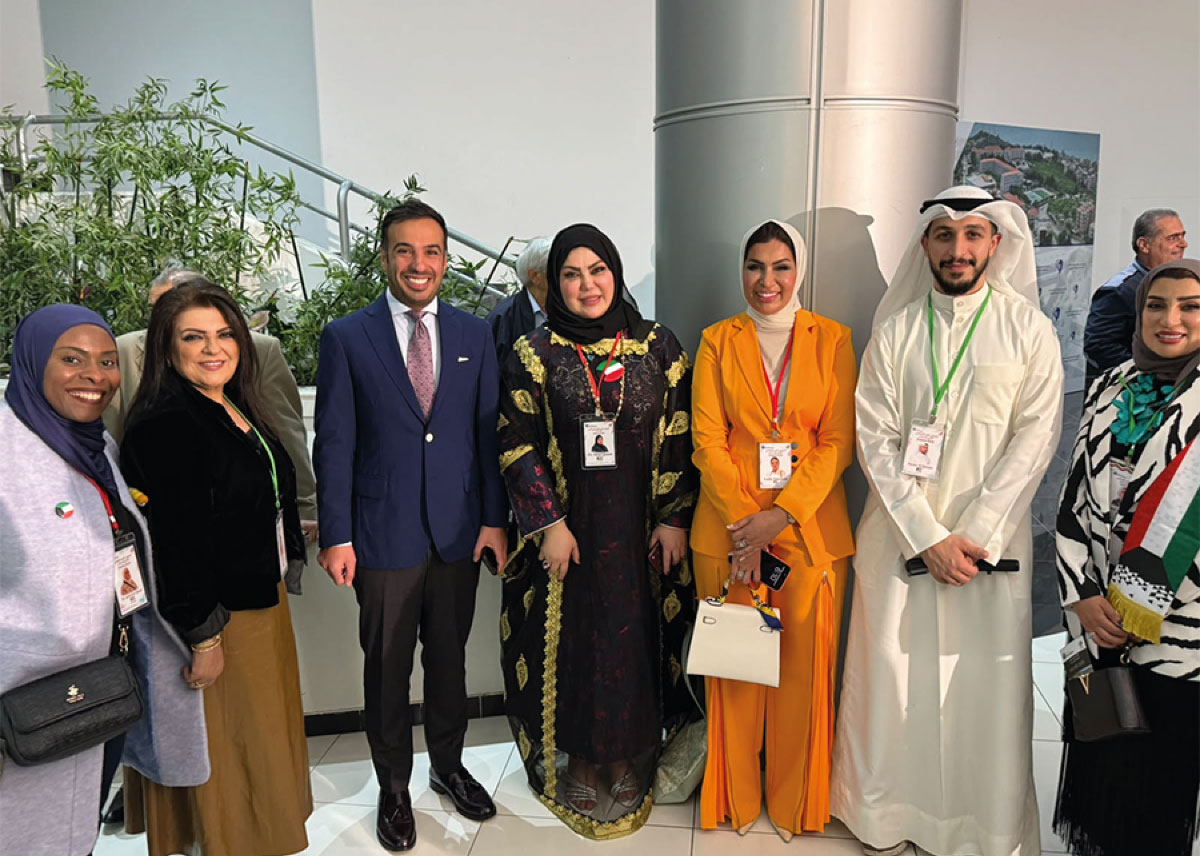
A group of Kuwaiti artists is showcasing the country's cultural heritage and contemporary visual arts at the second Salam 2026 International Fine Arts Exhibition in Lebanon. The event, held in Zouk Mosbeh, north of Beirut, brings together artists from Kuwait, Lebanon and other Arab countries to promote cultural exchange through painting, sculpture and ceramics.
Organised by the Art Istidama Association, the exhibition runs from November 27 to 29, 2026. Kuwaiti participants are presenting artworks inspired by traditional crafts, desert landscapes, architecture and the country's historical development, while organisers aim to strengthen dialogue and understanding among artists from different cultural backgrounds.
The Kuwaiti Embassy in Beirut participated in the opening ceremony, represented by Counsellor Abdullah Al-Daiyeen. Speaking to the Kuwait News Agency (KUNA), he reaffirmed the embassy's commitment to supporting Kuwaiti artists and accompanying their participation in cultural activities organised in Lebanon.
Al-Daiyeen praised the role of Kuwaiti artists in presenting the country's cultural identity to international audiences. He highlighted their contributions to communicating Kuwait's humanitarian values, historical traditions and artistic heritage through creative expression.
Dr Abeer Al-Kandari, a faculty member at Kuwait's College of Basic Education specialising in art education, presented a painting inspired by Lebanon's natural terrain. She explained that the work explores human emotions and their interaction with the surrounding landscape.
Kuwaiti visual artist and architectural designer Dr Mona Qasim participated with an artwork celebrating traditional Kuwaiti culture. Her painting incorporates heritage elements, including Sadu weaving, traditional theatre, headwear, Al-Muzannat, gold hand ornaments and incense, reflecting customs that remain part of Kuwaiti social gatherings.
Artist Latifa Al-Mansour, who began her artistic journey at the age of 15, showcased a realistic painting inspired by Kuwait's desert environment. Her work highlights the distinctive characteristics of the landscape and its influence on the country's traditional way of life.
Kuwaiti artist Aseel Al-Failakawi presented a painting focusing on Sadu weaving, one of the traditional crafts associated with Kuwait's cultural identity. She emphasised the importance of participating in international exhibitions, explaining that interaction with painters and sculptors from other countries helps artists exchange ideas, develop their skills and broaden their creative experiences.
Ceramic artist Nasser Al-Quraini contributed a work titled The Swallow Bird, combining ceramic sculpture with functional pottery. The piece incorporates techniques used to produce vessels suitable for use in homes, bringing together artistic expression and practical craftsmanship.
Al-Quraini, who has participated in numerous exhibitions outside Kuwait, said international artistic events provide valuable opportunities for cultural exchange. He noted that such gatherings allow artists to share experiences, discover different creative approaches and establish professional relationships.
Dr Aghareed Al-Saad also represented Kuwait with a painting exploring the country's transformation from past to present. Her work portrays Kuwait's historical development while highlighting cultural symbols that have remained important over time, including traditional currency and Sadu textiles.
The exhibition features a range of artistic styles and interpretations, allowing participating artists to express their national identities while engaging with shared cultural and humanitarian themes.
Raja Nicolas, President of the Art Istidama Association, explained that Salam 2026 is the second international fine arts exhibition organised in Lebanon. The three-day event brings together established visual artists from Lebanon and several Arab countries.
Nicolas said the exhibition is intended to serve as an artistic and cultural meeting point that promotes communication, dialogue and peace among different communities. She described art as a means of exchanging knowledge, celebrating cultural diversity and strengthening shared human values.
The participation of Kuwaiti artists in Salam 2026 highlights the role of international cultural exhibitions in introducing regional audiences to Kuwait's artistic traditions, contemporary creativity and heritage.