

Wife of Italian killed in Kuwait attack recalls their final conversation

Wife of Italian killed in Kuwait attack recalls their final conversation

The wife of an Italian national killed in an attack attributed to Iran on a vital facility in Kuwait has shared an emotional account of their final moments together, recalling a marriage built around more than two decades of connections to the country. Simona, the wife of Antonio Saccuccio, said Kuwait had become their home and expressed gratitude to the Kuwaiti Ministry of Defence for supporting her following her husband's death.

Speaking to Kuwaiti newspaper Al Rai, Simona described the personal loss she suffered after Antonio was killed in Thursday's attack. The couple met and married in Kuwait and had been preparing to celebrate their eighth wedding anniversary on December 12. She also recalled their final telephone conversation, during which Antonio told her he would be late returning from work and ended the call by telling her he loved her.
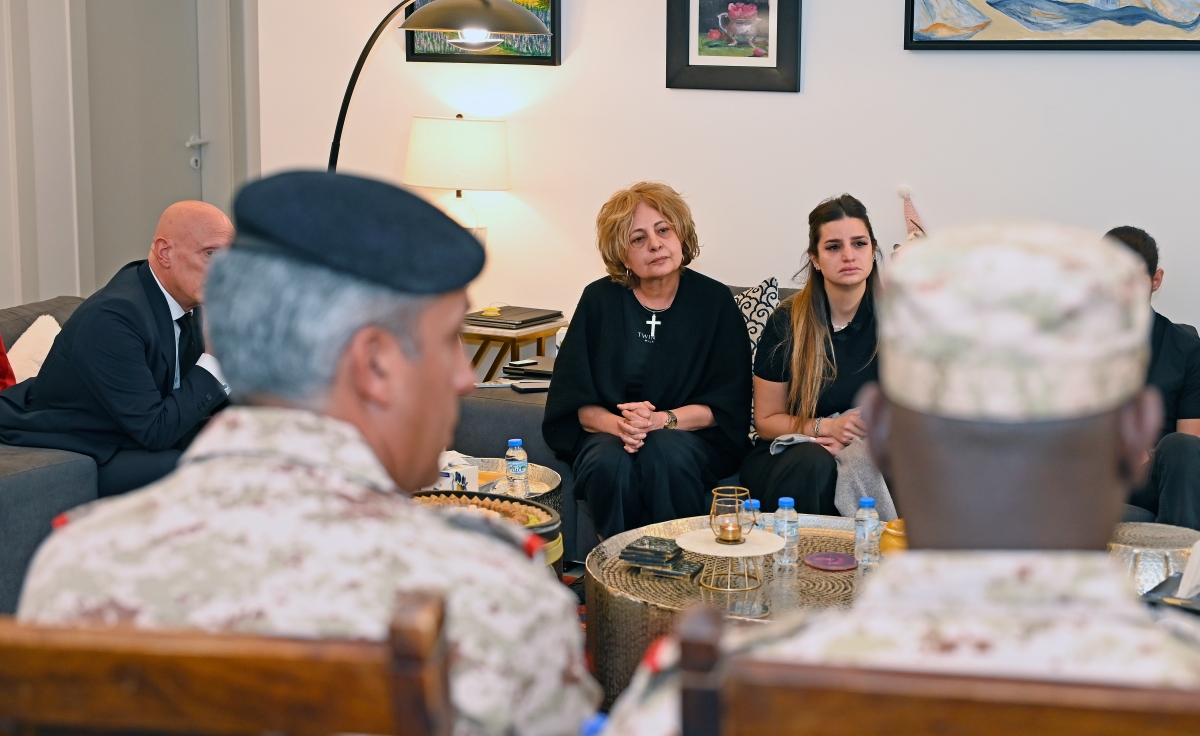
Simona said her husband had been the centre of her life, describing him as a kind-hearted, hardworking man who was respected and appreciated by those around him. His death, she explained, had left an enormous gap in her life.

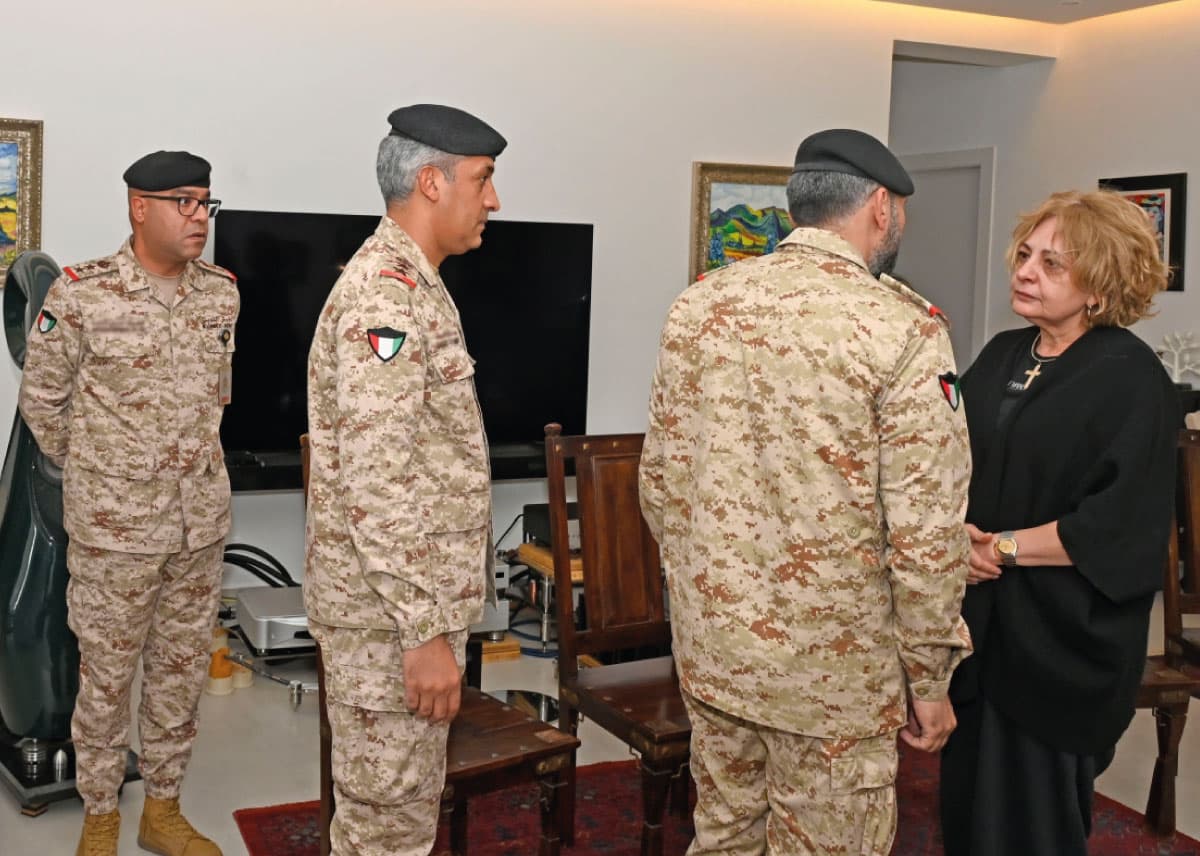
She expressed particular appreciation for the Kuwaiti Ministry of Defence and senior military officials who visited her to offer condolences and enquire about her circumstances. Their support, she said, had provided comfort during an extremely difficult period.

Several members of the Kuwaiti military told her that Antonio had been their friend and that they valued his work and personal qualities. Simona said learning how highly her husband was regarded by his colleagues gave her a measure of consolation.

Couple built their life together in Kuwait

Simona has lived in Kuwait since 2000 and said her connection to the country remained deeply personal. It was in Kuwait that she met Antonio, developed their relationship and eventually married him.

She explained that both she and her husband loved Kuwait and had found stability and comfort while living there. Antonio was particularly attached to the country and enjoyed his professional responsibilities.

The couple had been looking forward to celebrating eight years of marriage on December 12. Instead, Simona is now preparing to return to Italy with her husband's remains.

She said that despite her loss, she could not forget the years they spent together in Kuwait or the relationships they established during their time in the country.

Final phone call ended with 'I love you'

Recalling the days before Antonio's death, Simona explained that her husband frequently worked long hours, leaving them with limited opportunities to spend time together.

The Wednesday before the attack was different. The couple managed to go shopping and have dinner with friends, an outing that became their final evening together before Antonio left for work the following morning.

Simona said their last telephone conversation took place at 12:25pm. During the call, Antonio explained that he needed to complete some tasks at work and would therefore be delayed in returning home.

He ended the conversation by saying, "I love you." According to Simona, those were the final words she heard from her husband.

Italian Foreign Minister offers condolences and assistance

Simona also revealed that Italy's Foreign Minister contacted her personally to offer condolences on behalf of the Italian government.

She said the minister described Antonio as a brave man and assured her that the Italian authorities were prepared to provide whatever assistance she needed.

Arrangements to transfer Antonio's remains to Italy were still being completed at the time of her interview. Simona said a date for the repatriation had not yet been confirmed.

The chief executive of the Italian company where Antonio worked was expected to travel to Kuwait and accompany her on the return journey to Italy with her husband's remains.

Simona thanked those who had given her the opportunity to share her husband's story, saying she wanted the public to know about Antonio and his contributions during his years of work and residence in Kuwait.

Former Italian military attaché remembers more than 20 years of service

Salvatore Ferrera, a former Italian military attaché to Kuwait, also paid tribute to Antonio Saccuccio, describing his death as a significant loss to both Italy and Kuwait.

Ferrera said he first met Antonio shortly after arriving in Kuwait in January 2021, during the Covid-19 pandemic. His diplomatic assignment in the country continued until May 2024.

The two became acquainted through Antonio's employment with an Italian company, and their professional relationship eventually developed into a close friendship.

Ferrera remembered Antonio as a generous and dependable person who was always willing to help others. He praised his dedication to work and his commitment to maintaining high professional standards.

According to the former military attaché, Antonio spent more than 20 years supporting Kuwait's defence sector through his technical and professional responsibilities.

Ferrera said Antonio was often among the first to respond when maintenance work or technical assistance was required. His commitment and readiness to serve made him well known among people working in Kuwait's defence community.

He added that Antonio had developed strong relationships throughout his years in Kuwait and was widely respected by colleagues. Ferrera described him as a valued professional whose death had affected many people in both countries.

Join us on WhatsApp and Facebook

Kuwait and Italy discuss stronger military and security cooperation

Kuwait and Italy discuss stronger military and security cooperation

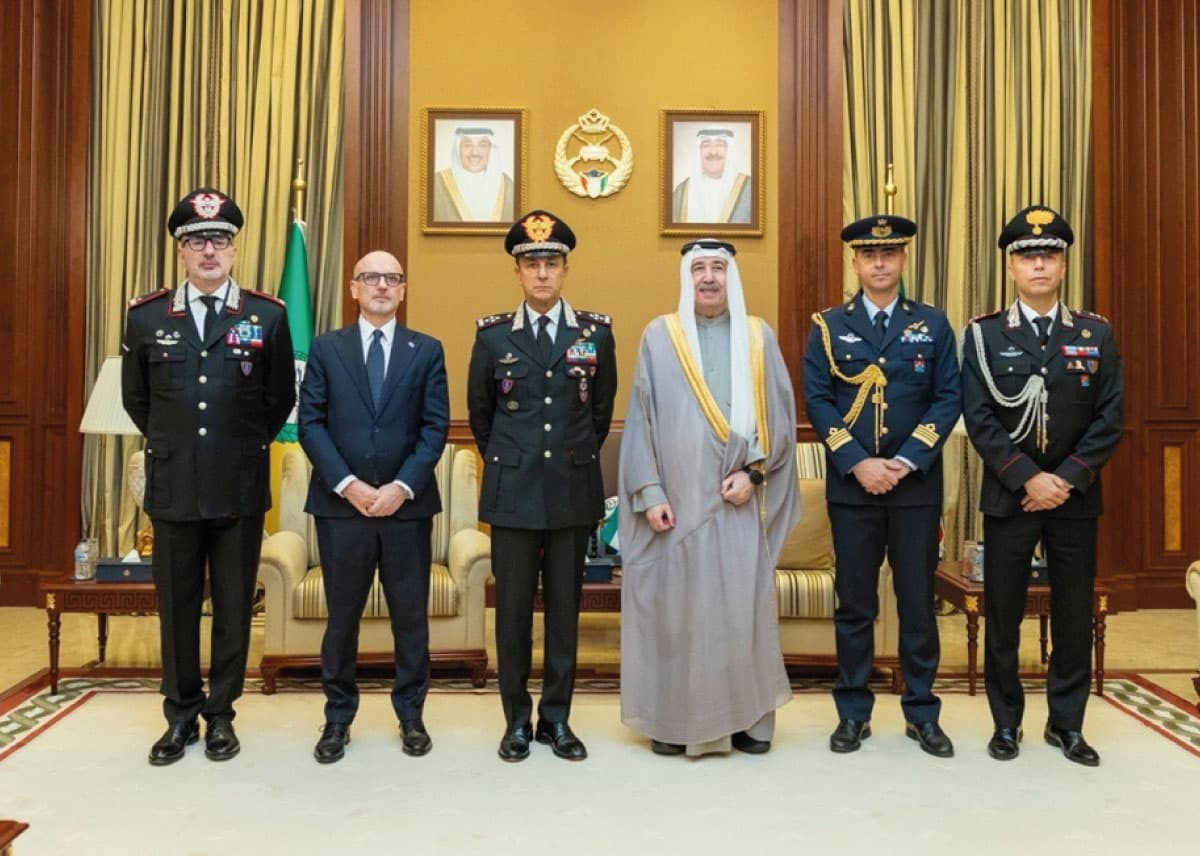
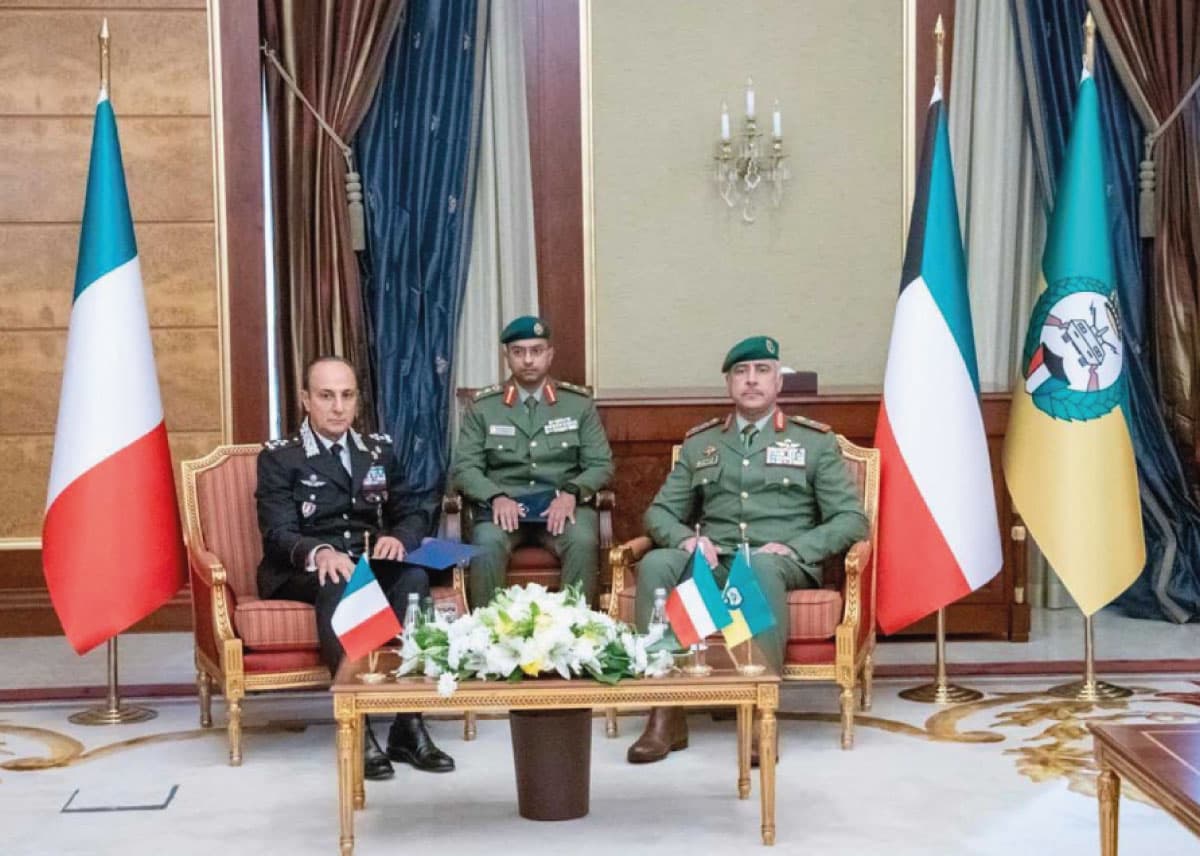
Kuwait's National Guard has held high-level discussions with Italy's Carabinieri to strengthen military and security cooperation, expand professional exchanges and explore opportunities for developing training and operational capabilities. The meeting took place during an official visit by a senior Italian delegation to Kuwait.

Lieutenant General Hamad Al-Bargis, Undersecretary of the Kuwait National Guard, received General Salvatore Luongo, Commander General of the Italian Carabinieri, and his accompanying delegation. Senior National Guard officers also attended the meeting, which focused on strengthening institutional partnerships and sharing expertise in military and security operations.

Al-Bargis welcomed the Italian delegation and emphasised the importance of reciprocal visits in strengthening cooperation between the two institutions. He highlighted the value of exchanging practical experience and benefiting from established military and security practices, particularly in training and personnel development.

The National Guard undersecretary said cooperation with friendly military and security organisations provides opportunities to exchange expertise and learn about modern technologies. Such partnerships can contribute to improving operational capabilities, institutional efficiency and preparedness for assigned responsibilities.

He also reaffirmed the National Guard's commitment to expanding cooperation with counterpart organisations in friendly countries. International partnerships, he explained, play an important role in helping security and military institutions keep pace with developments in their respective fields.

Italian delegation visits Kuwait National Guard facilities

Following the meeting, the Italian delegation toured several National Guard facilities to learn about their operational systems, training arrangements and technical capabilities.

The visit included the Operations Centre and its security and crisis management systems. Officials explained the centre's working procedures, operational mechanisms and coordination arrangements involving relevant authorities.

The delegation also received a briefing on the Kuwait National Guard's principal duties and responsibilities, providing an overview of its organisational role and operational activities.

Training facilities and military equipment reviewed

The Italian visitors continued their programme with a visit to Al-Sumoud Camp, where they inspected the training facilities and capabilities of the shooting range.

During the visit, National Guard personnel explained the equipment and procedures used in training activities. The delegation was introduced to arrangements intended to support personnel development and operational preparedness.

The programme also included an exhibition of vehicles and equipment used by the Kuwait National Guard. Officials presented selected technical and logistical capabilities and explained how the equipment supports different operational tasks.

The Italian delegation received information about the equipment's functions, technical characteristics and practical applications. The presentations highlighted the National Guard's approach to maintaining and developing resources used in its operations.

At the conclusion of the visit, the Italian delegation praised the development of the Kuwait National Guard and its efforts to modernise operational systems, strengthen training programmes and improve institutional capabilities.

The meeting and facility visits formed part of ongoing efforts to promote cooperation and professional exchanges between Kuwait's National Guard and Italy's Carabinieri.

Join us on WhatsApp and Facebook

Kuwait finds hiring irregularities at cooperative societies, warns of legal action

Kuwait finds hiring irregularities at cooperative societies, warns of legal action

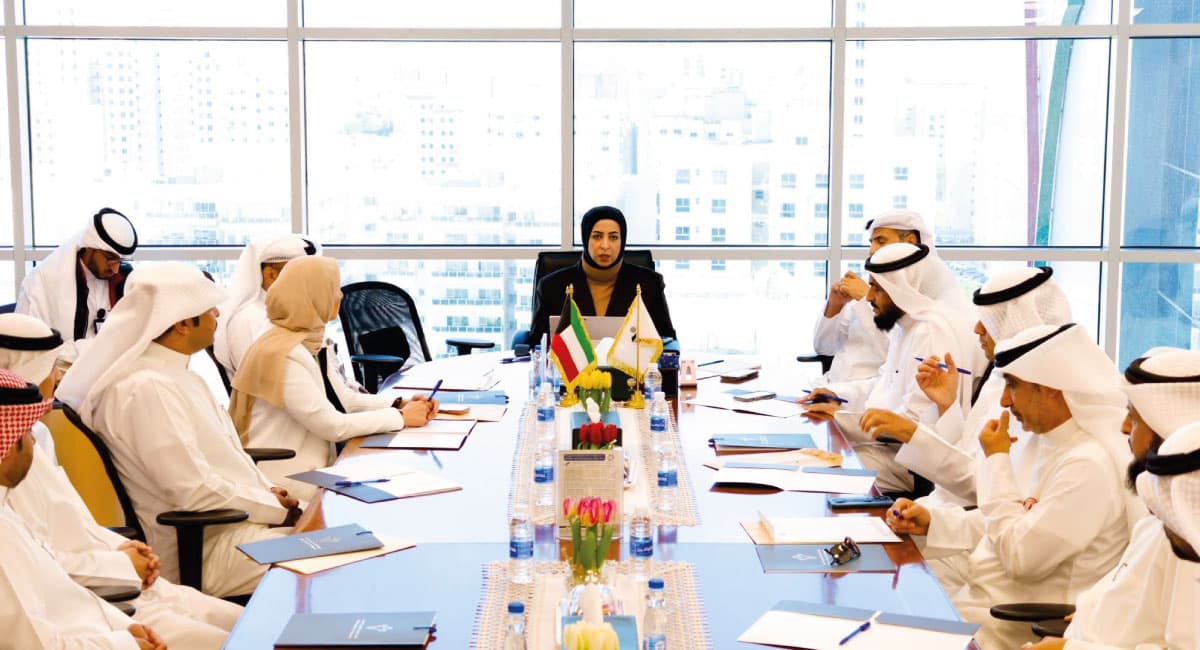
Kuwait's Ministry of Social Affairs has uncovered irregularities in recruitment practices at several cooperative societies, including cases where no Kuwaiti employees were employed and one society had 67 workers registered under the job title of clerk. The ministry announced on Saturday that it would continue reviewing appointments across the cooperative sector to address excessive staffing, strengthen compliance with Kuwaitisation requirements and protect shareholders' funds.

The review is being conducted under the directives of Minister of Social Affairs and Family and Childhood Affairs Dr Amthal Al-Huwaila. According to the ministry, the findings have raised questions about staffing needs, recruitment justifications and whether certain positions are appropriate for the activities of cooperative societies.

The ministry said its examination of employment records identified significant differences in recruitment practices between cooperative societies. Some were found to have no Kuwaiti employees, raising concerns about compliance with national workforce requirements.

In one cooperative society, investigators identified 67 employees working under the designation of clerk. The ministry said these appointments require further examination to determine whether the number of employees is justified by actual operational needs.

The review also identified several unusual job titles requiring verification of their relevance to cooperative activities. The ministry has not concluded that every position identified constitutes a violation, but said their necessity and connection to cooperative operations must be assessed.

Job positions under review at Kuwait cooperative societies

The ministry identified several job titles that require further investigation to establish whether they are necessary and appropriate for the sector.

Positions highlighted during the review include:

  • Clerk: One cooperative society employed 67 people under this designation.
  • Firefighting officer: A position requiring verification of its relevance to cooperative operations.
  • Playground officer: A job title identified for further examination.
  • Nursery director: A position whose connection to cooperative activities requires review.
  • Nursery teacher: Another designation included in the ministry's findings.
  • Assistant nursery officer: A role requiring assessment of its operational necessity.
  • Diwaniya director: A position identified for verification.
  • Second secretary: A job title requiring examination of its responsibilities.
  • Passport officer: Another position whose relevance to cooperative activities is being reviewed.

The ministry stressed that the inspections form part of broader efforts to combat financial and administrative corruption and address accumulated problems within the cooperative employment system.

It said some previous recruitment practices had raised suspicions of favouritism, preferential treatment and personal interests taking precedence over competence, equal opportunities and the interests of shareholders.

The ministry emphasised that cooperative societies must not be used to provide personal or electoral advantages at the expense of shareholders' money. Employment decisions should instead reflect legitimate operational requirements and comply with established recruitment regulations.

Ministry to review appointments across all cooperatives

The Ministry of Social Affairs confirmed that it is compiling and examining employment records from all cooperative societies to determine whether appointments are justified and whether staffing levels reflect actual needs.

The review will also assess compliance with Kuwaitisation percentages, employment regulations and relevant ministerial decisions. The ministry aims to identify unnecessary positions and ensure recruitment practices are consistent with the rules governing the cooperative sector.

Authorities warned that violations would be recorded against non-compliant societies and that legal action would be taken where necessary. Cooperative boards of directors could also be held accountable for irregularities where their responsibility is established.

Unified job structure and salary scale proposed

As part of the reform process, the ministry announced that it has completed a draft unified employment framework and job classification system for cooperative society workers.

The proposal has been submitted to the relevant authorities for approval. It is intended to standardise employment arrangements and establish clearer requirements for positions across the cooperative sector.

The proposed framework includes:

  • Unified job titles: Standardising position names across cooperative societies.
  • Organisational structures: Establishing consistent staffing arrangements.
  • Salary scales: Introducing a unified framework for employee remuneration.
  • Job responsibilities: Clearly defining the duties associated with each position.
  • Qualification requirements: Specifying the qualifications necessary for recruitment.
  • Workforce efficiency: Addressing excessive staffing and controlling salary expenditure.
  • Kuwaitisation: Strengthening opportunities for Kuwaiti nationals in cooperative employment.

The ministry said the proposed framework aims to reduce unnecessary salary expenditure, prevent recruitment practices involving favouritism and reinforce merit-based employment decisions.

It also seeks to close administrative gaps that may have allowed appointments unrelated to genuine operational requirements. The ministry considers standardised job descriptions and qualification requirements important measures for improving accountability.

However, the framework remains subject to approval by the competent authorities. The ministry did not announce an implementation date for the proposed employment structure or salary scale.

Cooperative boards warned over inherited violations

The Ministry of Social Affairs confirmed that all cooperative societies, without exception, will remain subject to inspections, auditing and accountability measures.

It stressed that current boards of directors cannot avoid responsibility for correcting irregularities simply because problematic appointments or practices originated under previous management.

The ministry said cooperative boards must take the necessary steps to address violations, protect shareholders' funds and prevent financial waste. Inspections and employment reviews will continue as part of efforts to strengthen governance and ensure compliance throughout Kuwait's cooperative sector.

Join us on WhatsApp and Facebook