


UAE Aviation Expansion Accelerates With Airport Upgrades and New International Routes

UAE Aviation Expansion Accelerates With Airport Upgrades and New International Routes

The UAE is strengthening its position as a global aviation hub through major airport expansion projects, increasing passenger traffic and continued investment in international flight networks. Dubai, Abu Dhabi and Sharjah are upgrading their aviation infrastructure while national airlines introduce new destinations, expand fleets and improve passenger services to meet growing travel and commercial demand.

Recent figures released by airport operators and airlines highlight the scale of development across the country's aviation industry. Dubai International Airport handled 50.4 million passengers during the first nine months of 2026, while Abu Dhabi Airports welcomed 8.61 million travellers in the third quarter alone. Sharjah International Airport also recorded more than 11.6 million passengers between January and September, reflecting the continued importance of aviation to the UAE's transport, tourism and logistics sectors.

Dubai International Airport (DXB) handled 18.8 million passengers during the third quarter of 2026, with August emerging as the busiest month of the period at 6.6 million travellers. The airport's international network now covers 235 destinations in 101 countries, served by 57 airlines.

Aircraft movements at Dubai International reached approximately 243,000 during the first nine months of the year, while cargo handling totalled 1.215 million tonnes. These figures demonstrate the airport's extensive passenger and freight operations and its continued role in connecting international markets.

Dubai Airports is implementing a major infrastructure improvement programme covering Dubai International and Dubai World Central. Planned and ongoing projects include improvements to the Terminal 3 access bridge, upgrades to roads serving Terminals 1 and 3, and airfield modifications intended to improve operational efficiency and flexibility.

The development programme also includes expanding and modernising remote boarding facilities and baggage-handling systems. At Al Maktoum International Airport, upgrades to passenger terminal facilities and boarding infrastructure are planned to support flydubai's operations and expected fleet growth.

Approximately Dh16 billion has been allocated to these infrastructure improvements, with contracts exceeding Dh7.5 billion already awarded. Separately, contracts worth approximately Dh56.5 billion have been awarded for the development of Al Maktoum International Airport, bringing the reported total value of awarded contracts to around Dh80 billion.

The latest construction agreements cover passenger terminals, aircraft boarding gates, transportation facilities, power infrastructure and essential airport services. The investments form part of Dubai's longer-term strategy to increase airport capacity and accommodate future growth in international aviation.

Abu Dhabi is also expanding its aviation network, supported by increasing passenger numbers and stronger cargo activity. Abu Dhabi Airports recorded 8.61 million passengers during the third quarter of 2026, representing a year-on-year increase of 1.4 percent.

Zayed International Airport accounted for 8.45 million passengers during the same period, up 1.2 percent from a year earlier. Across the Abu Dhabi Airports network, cargo volumes increased by 11.4 percent to 225,298 tonnes, while Zayed International Airport recorded 49,427 aircraft movements.

The airport network expanded to 124 destinations, compared with 112 during the corresponding period of 2025. Abu Dhabi Airports also strengthened cooperation with international carriers including Condor, Royal Jordanian, Air India Express and Oman Air, while Etihad Airways and Air Arabia Abu Dhabi introduced additional routes.

Sharjah International Airport is undertaking another significant capacity expansion. The airport handled 11,601,728 passengers between January and September 2026, following a record of more than 19.4 million travellers in 2025, when annual passenger traffic increased by 13.9 percent.

Serving more than 100 destinations worldwide, Sharjah Airport is investing in terminal improvements, operational infrastructure and digital services. A Dh2.4 billion development programme aims to raise its annual passenger-handling capacity to more than 25 million by the end of 2027.

The expansion is designed to accommodate future passenger growth while improving airport services and operational efficiency. Investments in modernised facilities and digital systems are intended to support airlines and passengers using Sharjah as an international travel gateway.

Alongside airport development, Emirates is expanding its international network and modernising existing aircraft. The Dubai-based airline announced a direct service to Helsinki, establishing what is planned to be the first year-round daily nonstop connection between the UAE and Finland.

The proposed Helsinki service is expected to strengthen passenger connections and commercial links between the two countries while giving travellers access to Emirates' wider international network through Dubai.

Emirates is also progressing with a major aircraft refurbishment programme involving 219 aircraft. The initiative includes improvements to passenger cabins and the introduction of Premium Economy seating across additional aircraft.

By September 2026, the airline reported completing upgrades on 104 aircraft, with the number expected to reach 116 by December. The number of aircraft equipped with Premium Economy had reached 137, with a target of 155 by the end of the year.

Etihad Airways is similarly strengthening its international connectivity from Abu Dhabi, particularly across Asian and European markets. In April 2026, the airline announced plans to expand services to five Chinese cities: Shanghai, Guangzhou, Chengdu, Hangzhou and Shenzhen.

The planned expansion includes 28 additional weekly flights, bringing Etihad's intended China operations to 35 weekly services across six destinations, including Beijing. The additional connections are designed to improve access to important commercial and travel markets.

During June, Etihad introduced direct services to Kraków in Poland, Palma de Mallorca in Spain, Damascus and Zanzibar. It also resumed five seasonal summer routes to Mykonos, Malaga, Santorini, Nice and Al Alamein.

The airline supported its summer expansion with an increase of 23 aircraft compared with the corresponding period of 2025. The larger fleet provided additional operating capacity as Etihad continued introducing destinations and developing its international network.

Meanwhile, flydubai expanded its route network during 2026 with the introduction or resumption of services to Aleppo, Benghazi and Bangkok. The airline also announced daily direct flights connecting Dubai with Pokhara in Nepal from September.

Pokhara became flydubai's second destination in Nepal after Kathmandu, with the service establishing the first scheduled international air connection between Pokhara and Dubai. The addition is part of the airline's strategy to strengthen connectivity with destinations across its international network.

In September, flydubai outlined further development plans, including growing its fleet beyond 100 aircraft and introducing a new cabin refurbishment programme. These investments are intended to support network expansion while improving the passenger experience.

The combined developments across Dubai, Abu Dhabi and Sharjah demonstrate the scale of investment supporting the UAE's aviation industry. Airport operators are focusing on capacity, modern facilities and operational efficiency, while airlines continue opening routes and upgrading their fleets.

The expansion also supports the country's wider economic priorities by strengthening international travel connections, facilitating trade and improving logistics infrastructure. With major airport projects progressing and national carriers expanding their networks, aviation remains an important component of the UAE's long-term transport and economic development strategy.

Join us on WhatsApp and Facebook

Kuwait and Italy discuss stronger military and security cooperation

Kuwait and Italy discuss stronger military and security cooperation

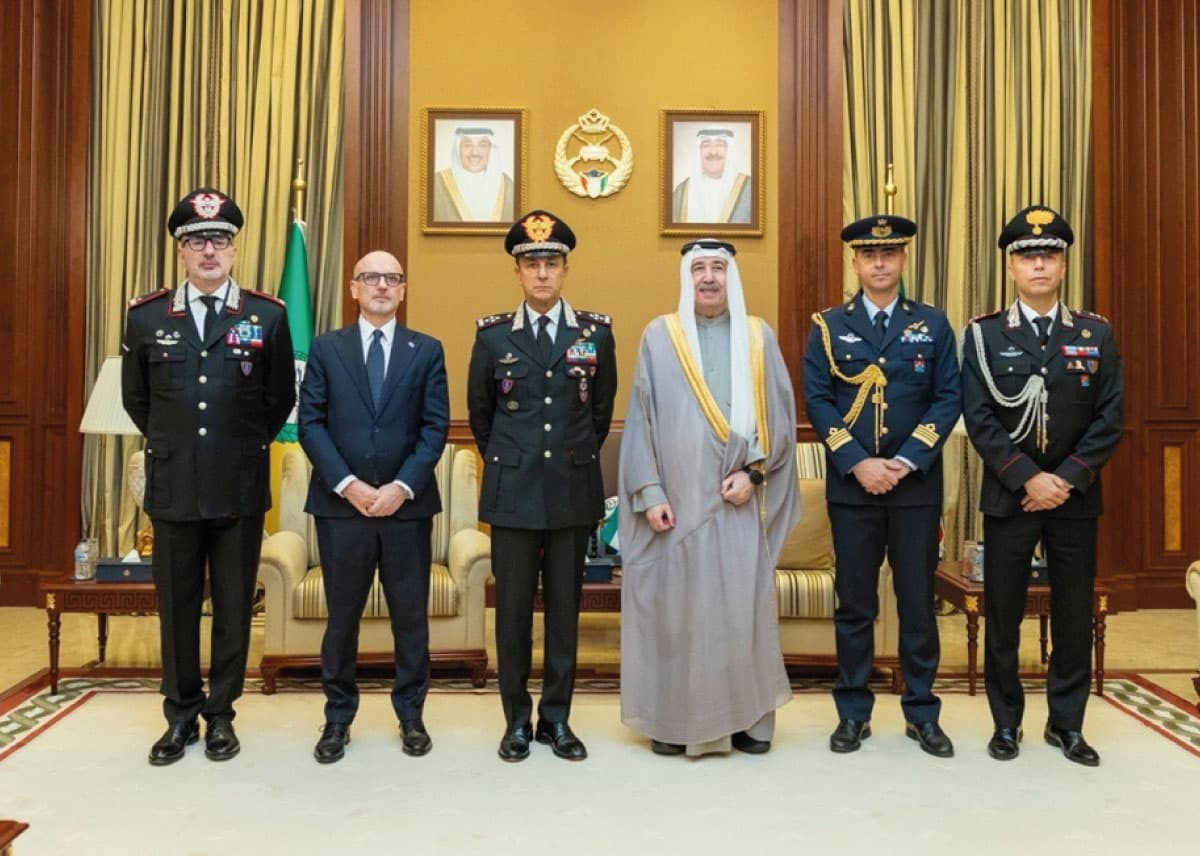
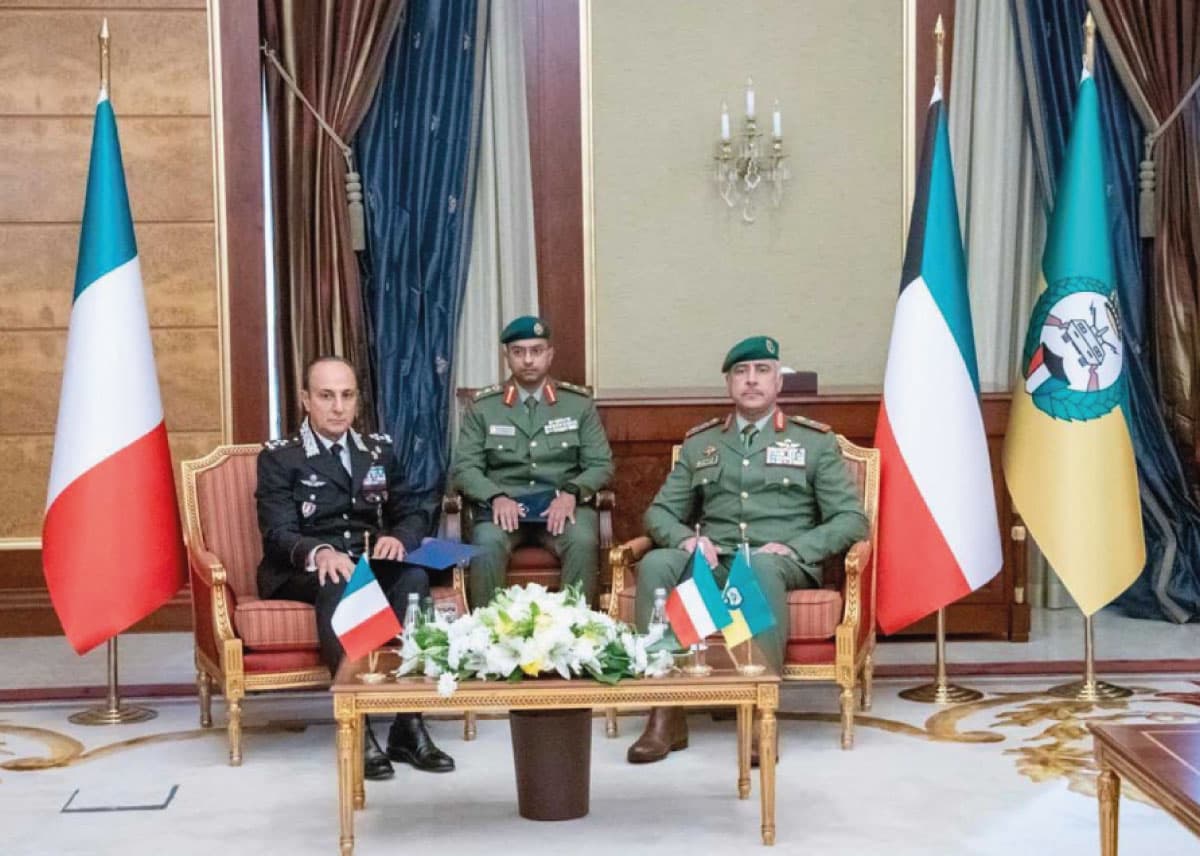
Kuwait's National Guard has held high-level discussions with Italy's Carabinieri to strengthen military and security cooperation, expand professional exchanges and explore opportunities for developing training and operational capabilities. The meeting took place during an official visit by a senior Italian delegation to Kuwait.

Lieutenant General Hamad Al-Bargis, Undersecretary of the Kuwait National Guard, received General Salvatore Luongo, Commander General of the Italian Carabinieri, and his accompanying delegation. Senior National Guard officers also attended the meeting, which focused on strengthening institutional partnerships and sharing expertise in military and security operations.

Al-Bargis welcomed the Italian delegation and emphasised the importance of reciprocal visits in strengthening cooperation between the two institutions. He highlighted the value of exchanging practical experience and benefiting from established military and security practices, particularly in training and personnel development.

The National Guard undersecretary said cooperation with friendly military and security organisations provides opportunities to exchange expertise and learn about modern technologies. Such partnerships can contribute to improving operational capabilities, institutional efficiency and preparedness for assigned responsibilities.

He also reaffirmed the National Guard's commitment to expanding cooperation with counterpart organisations in friendly countries. International partnerships, he explained, play an important role in helping security and military institutions keep pace with developments in their respective fields.

Italian delegation visits Kuwait National Guard facilities

Following the meeting, the Italian delegation toured several National Guard facilities to learn about their operational systems, training arrangements and technical capabilities.

The visit included the Operations Centre and its security and crisis management systems. Officials explained the centre's working procedures, operational mechanisms and coordination arrangements involving relevant authorities.

The delegation also received a briefing on the Kuwait National Guard's principal duties and responsibilities, providing an overview of its organisational role and operational activities.

Training facilities and military equipment reviewed

The Italian visitors continued their programme with a visit to Al-Sumoud Camp, where they inspected the training facilities and capabilities of the shooting range.

During the visit, National Guard personnel explained the equipment and procedures used in training activities. The delegation was introduced to arrangements intended to support personnel development and operational preparedness.

The programme also included an exhibition of vehicles and equipment used by the Kuwait National Guard. Officials presented selected technical and logistical capabilities and explained how the equipment supports different operational tasks.

The Italian delegation received information about the equipment's functions, technical characteristics and practical applications. The presentations highlighted the National Guard's approach to maintaining and developing resources used in its operations.

At the conclusion of the visit, the Italian delegation praised the development of the Kuwait National Guard and its efforts to modernise operational systems, strengthen training programmes and improve institutional capabilities.

The meeting and facility visits formed part of ongoing efforts to promote cooperation and professional exchanges between Kuwait's National Guard and Italy's Carabinieri.

Join us on WhatsApp and Facebook

Kuwait finds hiring irregularities at cooperative societies, warns of legal action

Kuwait finds hiring irregularities at cooperative societies, warns of legal action

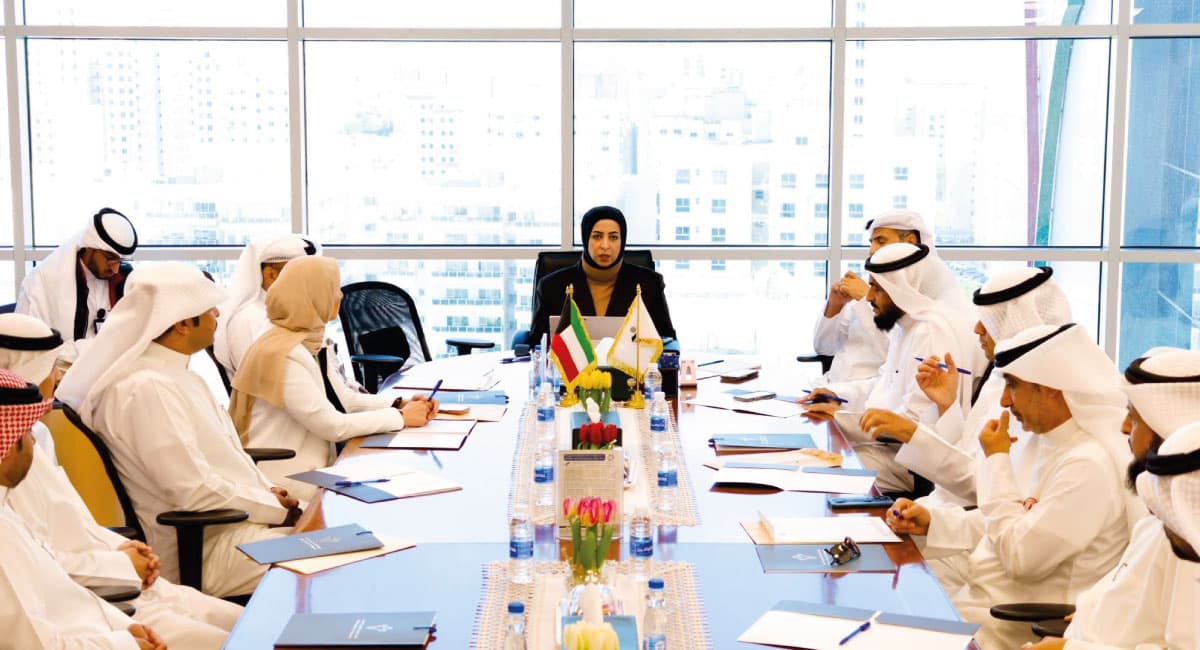
Kuwait's Ministry of Social Affairs has uncovered irregularities in recruitment practices at several cooperative societies, including cases where no Kuwaiti employees were employed and one society had 67 workers registered under the job title of clerk. The ministry announced on Saturday that it would continue reviewing appointments across the cooperative sector to address excessive staffing, strengthen compliance with Kuwaitisation requirements and protect shareholders' funds.

The review is being conducted under the directives of Minister of Social Affairs and Family and Childhood Affairs Dr Amthal Al-Huwaila. According to the ministry, the findings have raised questions about staffing needs, recruitment justifications and whether certain positions are appropriate for the activities of cooperative societies.

The ministry said its examination of employment records identified significant differences in recruitment practices between cooperative societies. Some were found to have no Kuwaiti employees, raising concerns about compliance with national workforce requirements.

In one cooperative society, investigators identified 67 employees working under the designation of clerk. The ministry said these appointments require further examination to determine whether the number of employees is justified by actual operational needs.

The review also identified several unusual job titles requiring verification of their relevance to cooperative activities. The ministry has not concluded that every position identified constitutes a violation, but said their necessity and connection to cooperative operations must be assessed.

Job positions under review at Kuwait cooperative societies

The ministry identified several job titles that require further investigation to establish whether they are necessary and appropriate for the sector.

Positions highlighted during the review include:

  • Clerk: One cooperative society employed 67 people under this designation.
  • Firefighting officer: A position requiring verification of its relevance to cooperative operations.
  • Playground officer: A job title identified for further examination.
  • Nursery director: A position whose connection to cooperative activities requires review.
  • Nursery teacher: Another designation included in the ministry's findings.
  • Assistant nursery officer: A role requiring assessment of its operational necessity.
  • Diwaniya director: A position identified for verification.
  • Second secretary: A job title requiring examination of its responsibilities.
  • Passport officer: Another position whose relevance to cooperative activities is being reviewed.

The ministry stressed that the inspections form part of broader efforts to combat financial and administrative corruption and address accumulated problems within the cooperative employment system.

It said some previous recruitment practices had raised suspicions of favouritism, preferential treatment and personal interests taking precedence over competence, equal opportunities and the interests of shareholders.

The ministry emphasised that cooperative societies must not be used to provide personal or electoral advantages at the expense of shareholders' money. Employment decisions should instead reflect legitimate operational requirements and comply with established recruitment regulations.

Ministry to review appointments across all cooperatives

The Ministry of Social Affairs confirmed that it is compiling and examining employment records from all cooperative societies to determine whether appointments are justified and whether staffing levels reflect actual needs.

The review will also assess compliance with Kuwaitisation percentages, employment regulations and relevant ministerial decisions. The ministry aims to identify unnecessary positions and ensure recruitment practices are consistent with the rules governing the cooperative sector.

Authorities warned that violations would be recorded against non-compliant societies and that legal action would be taken where necessary. Cooperative boards of directors could also be held accountable for irregularities where their responsibility is established.

Unified job structure and salary scale proposed

As part of the reform process, the ministry announced that it has completed a draft unified employment framework and job classification system for cooperative society workers.

The proposal has been submitted to the relevant authorities for approval. It is intended to standardise employment arrangements and establish clearer requirements for positions across the cooperative sector.

The proposed framework includes:

  • Unified job titles: Standardising position names across cooperative societies.
  • Organisational structures: Establishing consistent staffing arrangements.
  • Salary scales: Introducing a unified framework for employee remuneration.
  • Job responsibilities: Clearly defining the duties associated with each position.
  • Qualification requirements: Specifying the qualifications necessary for recruitment.
  • Workforce efficiency: Addressing excessive staffing and controlling salary expenditure.
  • Kuwaitisation: Strengthening opportunities for Kuwaiti nationals in cooperative employment.

The ministry said the proposed framework aims to reduce unnecessary salary expenditure, prevent recruitment practices involving favouritism and reinforce merit-based employment decisions.

It also seeks to close administrative gaps that may have allowed appointments unrelated to genuine operational requirements. The ministry considers standardised job descriptions and qualification requirements important measures for improving accountability.

However, the framework remains subject to approval by the competent authorities. The ministry did not announce an implementation date for the proposed employment structure or salary scale.

Cooperative boards warned over inherited violations

The Ministry of Social Affairs confirmed that all cooperative societies, without exception, will remain subject to inspections, auditing and accountability measures.

It stressed that current boards of directors cannot avoid responsibility for correcting irregularities simply because problematic appointments or practices originated under previous management.

The ministry said cooperative boards must take the necessary steps to address violations, protect shareholders' funds and prevent financial waste. Inspections and employment reviews will continue as part of efforts to strengthen governance and ensure compliance throughout Kuwait's cooperative sector.

Join us on WhatsApp and Facebook