


Dubai Stocks Recover All War Losses After 14% November Rally

Dubai Stocks Recover All War Losses After 14% November Rally

Dubai's stock market has recovered all losses recorded since the outbreak of the Iran war in February 2026, with the Dubai Financial Market (DFM) General Index gaining nearly 14 percent in November.

The rebound has placed Dubai among the Gulf's strongest-performing equity markets this year, with only Oman recording a better performance, according to a Bloomberg report.

The recovery marks a significant turnaround for Dubai equities, which suffered heavy selling during the early stages of the regional conflict. Banking and real estate stocks have helped drive the recent rally, while renewed foreign investment interest and improving economic indicators have contributed to stronger market confidence. November is on course to deliver the index's largest monthly gain since April 2020.


Before the conflict began on February 28, the DFM General Index had closed at 6,503.50 points on February 27. By March 18, it had fallen to 5,550.24 points, representing a decline of approximately 14.7 percent as investors responded to growing geopolitical uncertainty.

Property stocks were among the hardest hit during the initial sell-off, with Dubai's real estate index losing approximately 31 percent. By March 30, Dubai had become the weakest-performing major equity market in the Gulf, reflecting concerns about the conflict's impact on property demand, tourism and investment.

Trading conditions deteriorated sharply in early March after regulators temporarily closed UAE stock exchanges on March 2 and 3. When trading resumed on March 4, Dubai's benchmark index declined 4.7 percent, its steepest single-session loss since May 2022.

Abu Dhabi's benchmark also fell during the reopening session, declining 1.9 percent. The market reaction highlighted the immediate financial impact of the regional conflict and uncertainty surrounding its economic consequences.

However, Dubai equities gradually recovered as investors reassessed the resilience of the UAE economy. By November, the improvement had accelerated into a broad market rally, supported by stronger performances among major listed companies.

November 4 marked an important turning point, with the DFM General Index advancing 3.95 percent following the US midterm elections. Investors responded to expectations that tensions between Washington and Tehran could ease, helping generate renewed buying interest.

The rally lifted Dubai's stock market capitalisation above Dh1 trillion, compared with Dh967.22 billion in the preceding session. Telecommunications shares led the advance with a 7.81 percent increase, while real estate stocks gained 4.2 percent and banking shares rose 3.99 percent.

The upward momentum continued through November, with the benchmark closing at 6,575.07 points on Friday, November 27. The index gained 91.05 points, or 1.40 percent, during the session, surpassing its pre-war closing level for the first time since the conflict began.


Emaar Properties, Dubai Islamic Bank and Emirates NBD were among the actively traded shares by value. Dubai Financial Market Company's own stock recorded a 7.82 percent gain during Friday's trading session.

The recovery has also attracted attention from international investment banks. JPMorgan upgraded its recommendation for the MSCI UAE equity market from neutral to overweight in November, citing stronger-than-expected economic resilience and relatively attractive valuations.

Morgan Stanley also adopted an overweight position on UAE equities, highlighting Dubai's market recovery alongside continued capital investment in Abu Dhabi. These assessments indicate greater institutional interest in UAE-listed companies following the earlier market decline.

The MSCI UAE Index has been trading at approximately 9.4 times expected earnings, below its average valuation of more than 10 times over the past decade. The comparatively lower valuation has been cited by analysts as one factor supporting investment interest.

Cantor Fitzgerald analyst Kato Mukuru had recommended purchasing UAE banking shares in March, when regional tensions were weighing heavily on local financial markets. He later attributed part of the recovery to government spending that helped support economic activity during a period of weaker foreign investment.

Other indicators have also suggested improvement in Dubai's domestic economy. According to Morgan Stanley, the emirate's population in October was approximately 2.4 percent higher than its peak before the conflict, reflecting the return of some residents who had departed during the fighting.

Rental registrations and road traffic have also increased, indicating stronger residential and commercial activity. Nevertheless, tourism has not recovered at the same pace, leaving parts of the economy exposed to continued uncertainty surrounding regional travel and security conditions.

Despite the market's strong performance, analysts have cautioned that geopolitical risks remain significant. US President Donald Trump has indicated that military action could resume next year if diplomatic negotiations fail to produce an agreement.

The possibility of renewed conflict could affect investor confidence and foreign capital flows. JPMorgan expects overseas investment inflows to improve in 2027, provided corporate earnings strengthen and regional tensions do not escalate.

Analysts have also identified a potential challenge if government support measures introduced during the crisis are reduced. Mukuru warned that the pace of market gains could moderate if some of those measures are withdrawn, even if regional conditions become more stable.

The latest rebound therefore reflects a combination of stronger investor confidence, supportive economic policies and improving conditions in key sectors. However, the sustainability of further gains will depend partly on corporate performance, foreign investment and the regional security outlook.

Meanwhile, Dubai Financial Market has confirmed its trading schedule for the UAE's 55th Eid Al Etihad celebrations. The exchange will remain closed on Wednesday, December 2, and Thursday, December 3, 2026.

Regular market operations will resume on Friday, December 4, according to the official DFM announcement. Investors and traders should take the two-day closure into account when planning transactions around the National Day holiday.


The November rally represents a notable recovery for Dubai's financial market following months of volatility. With the benchmark now above its pre-conflict level, attention is shifting towards whether improving earnings, economic activity and foreign investment can sustain the upward trend into 2027.

Disclaimer: This article is for informational purposes only and does not constitute financial or investment advice. Stock market prices, valuations and analyst forecasts can change rapidly. Investors should evaluate their financial circumstances and consult qualified professionals before making investment decisions.

Join us on WhatsApp and Facebook

Kuwait and Italy discuss stronger military and security cooperation

Kuwait and Italy discuss stronger military and security cooperation

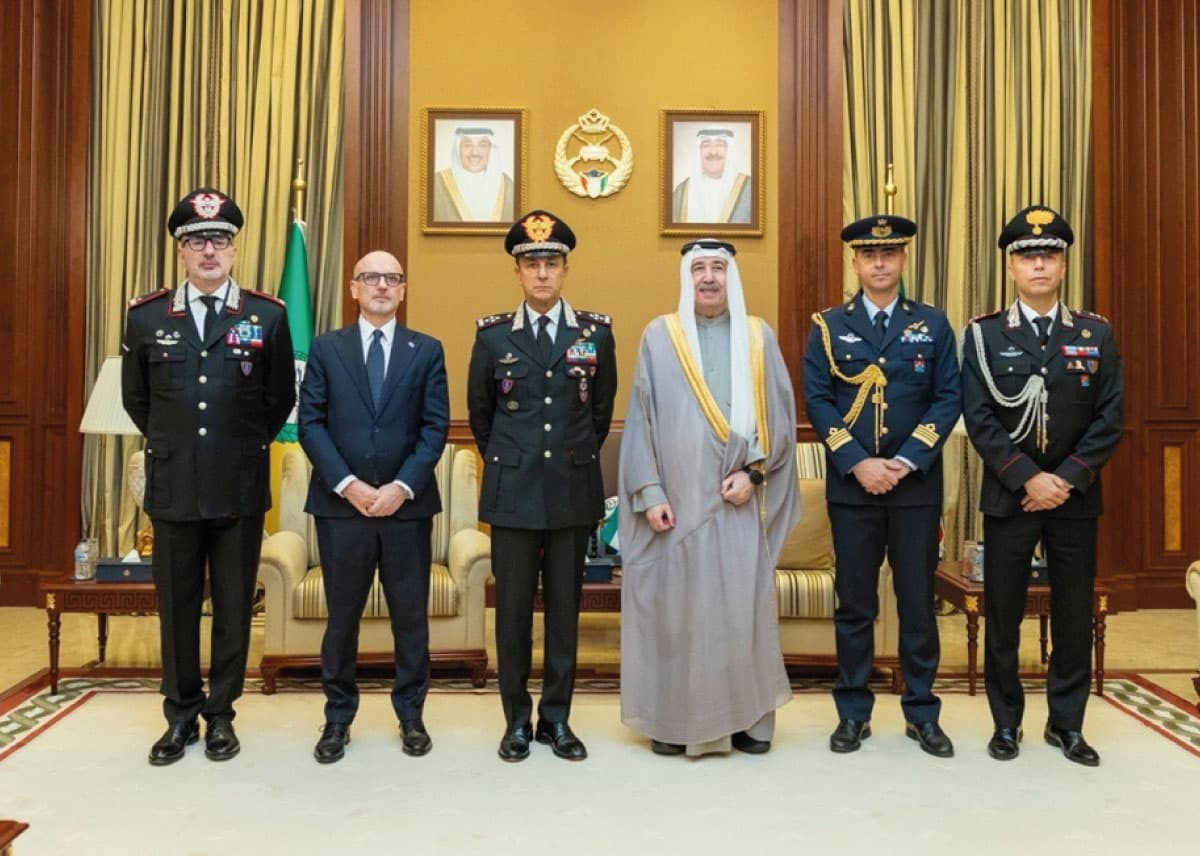
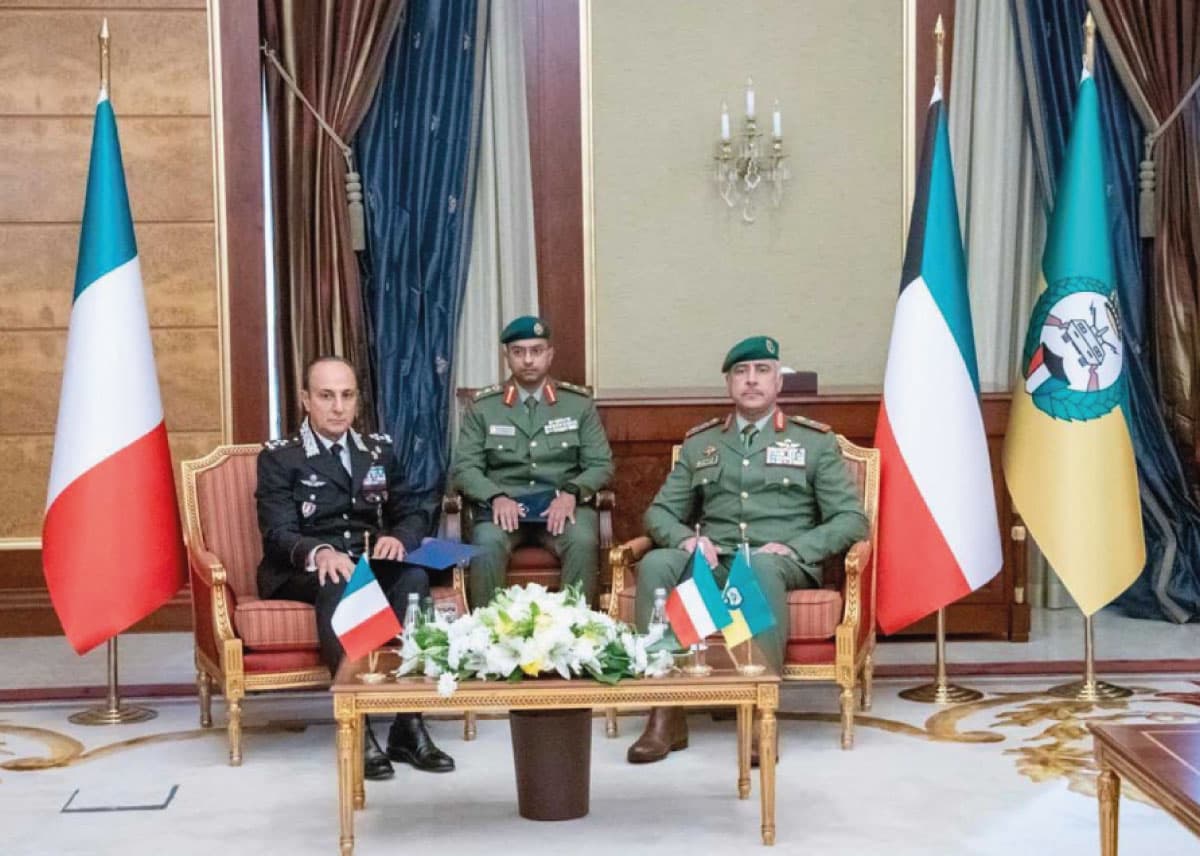
Kuwait's National Guard has held high-level discussions with Italy's Carabinieri to strengthen military and security cooperation, expand professional exchanges and explore opportunities for developing training and operational capabilities. The meeting took place during an official visit by a senior Italian delegation to Kuwait.

Lieutenant General Hamad Al-Bargis, Undersecretary of the Kuwait National Guard, received General Salvatore Luongo, Commander General of the Italian Carabinieri, and his accompanying delegation. Senior National Guard officers also attended the meeting, which focused on strengthening institutional partnerships and sharing expertise in military and security operations.

Al-Bargis welcomed the Italian delegation and emphasised the importance of reciprocal visits in strengthening cooperation between the two institutions. He highlighted the value of exchanging practical experience and benefiting from established military and security practices, particularly in training and personnel development.

The National Guard undersecretary said cooperation with friendly military and security organisations provides opportunities to exchange expertise and learn about modern technologies. Such partnerships can contribute to improving operational capabilities, institutional efficiency and preparedness for assigned responsibilities.

He also reaffirmed the National Guard's commitment to expanding cooperation with counterpart organisations in friendly countries. International partnerships, he explained, play an important role in helping security and military institutions keep pace with developments in their respective fields.

Italian delegation visits Kuwait National Guard facilities

Following the meeting, the Italian delegation toured several National Guard facilities to learn about their operational systems, training arrangements and technical capabilities.

The visit included the Operations Centre and its security and crisis management systems. Officials explained the centre's working procedures, operational mechanisms and coordination arrangements involving relevant authorities.

The delegation also received a briefing on the Kuwait National Guard's principal duties and responsibilities, providing an overview of its organisational role and operational activities.

Training facilities and military equipment reviewed

The Italian visitors continued their programme with a visit to Al-Sumoud Camp, where they inspected the training facilities and capabilities of the shooting range.

During the visit, National Guard personnel explained the equipment and procedures used in training activities. The delegation was introduced to arrangements intended to support personnel development and operational preparedness.

The programme also included an exhibition of vehicles and equipment used by the Kuwait National Guard. Officials presented selected technical and logistical capabilities and explained how the equipment supports different operational tasks.

The Italian delegation received information about the equipment's functions, technical characteristics and practical applications. The presentations highlighted the National Guard's approach to maintaining and developing resources used in its operations.

At the conclusion of the visit, the Italian delegation praised the development of the Kuwait National Guard and its efforts to modernise operational systems, strengthen training programmes and improve institutional capabilities.

The meeting and facility visits formed part of ongoing efforts to promote cooperation and professional exchanges between Kuwait's National Guard and Italy's Carabinieri.

Join us on WhatsApp and Facebook

Kuwait finds hiring irregularities at cooperative societies, warns of legal action

Kuwait finds hiring irregularities at cooperative societies, warns of legal action

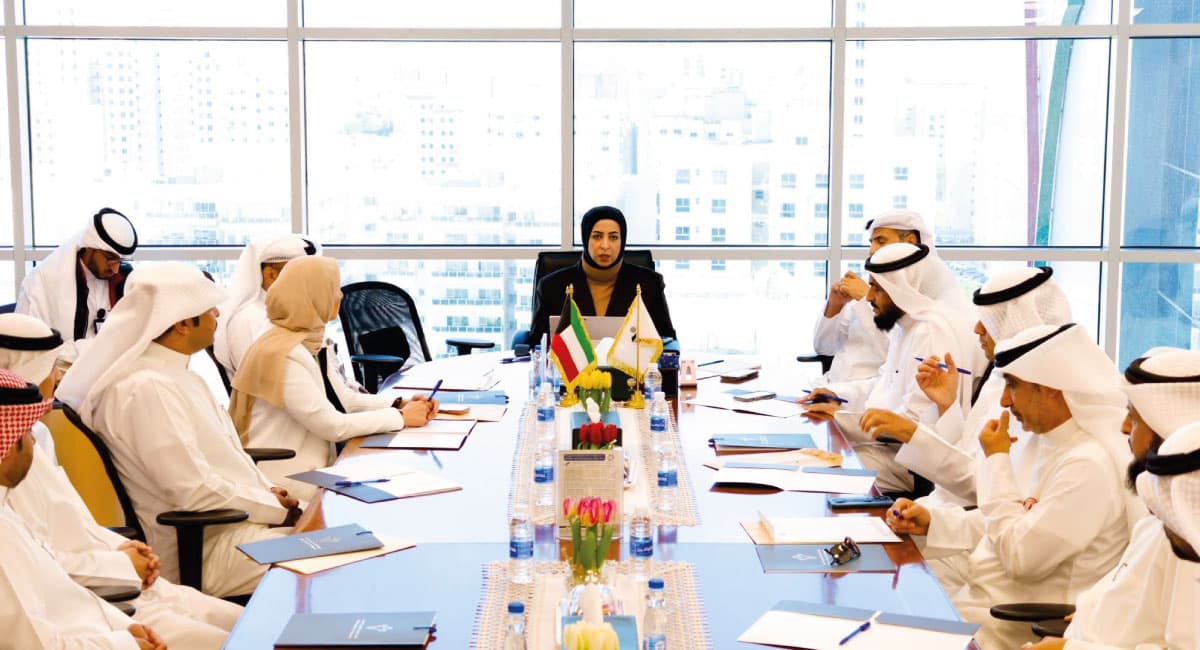
Kuwait's Ministry of Social Affairs has uncovered irregularities in recruitment practices at several cooperative societies, including cases where no Kuwaiti employees were employed and one society had 67 workers registered under the job title of clerk. The ministry announced on Saturday that it would continue reviewing appointments across the cooperative sector to address excessive staffing, strengthen compliance with Kuwaitisation requirements and protect shareholders' funds.

The review is being conducted under the directives of Minister of Social Affairs and Family and Childhood Affairs Dr Amthal Al-Huwaila. According to the ministry, the findings have raised questions about staffing needs, recruitment justifications and whether certain positions are appropriate for the activities of cooperative societies.

The ministry said its examination of employment records identified significant differences in recruitment practices between cooperative societies. Some were found to have no Kuwaiti employees, raising concerns about compliance with national workforce requirements.

In one cooperative society, investigators identified 67 employees working under the designation of clerk. The ministry said these appointments require further examination to determine whether the number of employees is justified by actual operational needs.

The review also identified several unusual job titles requiring verification of their relevance to cooperative activities. The ministry has not concluded that every position identified constitutes a violation, but said their necessity and connection to cooperative operations must be assessed.

Job positions under review at Kuwait cooperative societies

The ministry identified several job titles that require further investigation to establish whether they are necessary and appropriate for the sector.

Positions highlighted during the review include:

  • Clerk: One cooperative society employed 67 people under this designation.
  • Firefighting officer: A position requiring verification of its relevance to cooperative operations.
  • Playground officer: A job title identified for further examination.
  • Nursery director: A position whose connection to cooperative activities requires review.
  • Nursery teacher: Another designation included in the ministry's findings.
  • Assistant nursery officer: A role requiring assessment of its operational necessity.
  • Diwaniya director: A position identified for verification.
  • Second secretary: A job title requiring examination of its responsibilities.
  • Passport officer: Another position whose relevance to cooperative activities is being reviewed.

The ministry stressed that the inspections form part of broader efforts to combat financial and administrative corruption and address accumulated problems within the cooperative employment system.

It said some previous recruitment practices had raised suspicions of favouritism, preferential treatment and personal interests taking precedence over competence, equal opportunities and the interests of shareholders.

The ministry emphasised that cooperative societies must not be used to provide personal or electoral advantages at the expense of shareholders' money. Employment decisions should instead reflect legitimate operational requirements and comply with established recruitment regulations.

Ministry to review appointments across all cooperatives

The Ministry of Social Affairs confirmed that it is compiling and examining employment records from all cooperative societies to determine whether appointments are justified and whether staffing levels reflect actual needs.

The review will also assess compliance with Kuwaitisation percentages, employment regulations and relevant ministerial decisions. The ministry aims to identify unnecessary positions and ensure recruitment practices are consistent with the rules governing the cooperative sector.

Authorities warned that violations would be recorded against non-compliant societies and that legal action would be taken where necessary. Cooperative boards of directors could also be held accountable for irregularities where their responsibility is established.

Unified job structure and salary scale proposed

As part of the reform process, the ministry announced that it has completed a draft unified employment framework and job classification system for cooperative society workers.

The proposal has been submitted to the relevant authorities for approval. It is intended to standardise employment arrangements and establish clearer requirements for positions across the cooperative sector.

The proposed framework includes:

  • Unified job titles: Standardising position names across cooperative societies.
  • Organisational structures: Establishing consistent staffing arrangements.
  • Salary scales: Introducing a unified framework for employee remuneration.
  • Job responsibilities: Clearly defining the duties associated with each position.
  • Qualification requirements: Specifying the qualifications necessary for recruitment.
  • Workforce efficiency: Addressing excessive staffing and controlling salary expenditure.
  • Kuwaitisation: Strengthening opportunities for Kuwaiti nationals in cooperative employment.

The ministry said the proposed framework aims to reduce unnecessary salary expenditure, prevent recruitment practices involving favouritism and reinforce merit-based employment decisions.

It also seeks to close administrative gaps that may have allowed appointments unrelated to genuine operational requirements. The ministry considers standardised job descriptions and qualification requirements important measures for improving accountability.

However, the framework remains subject to approval by the competent authorities. The ministry did not announce an implementation date for the proposed employment structure or salary scale.

Cooperative boards warned over inherited violations

The Ministry of Social Affairs confirmed that all cooperative societies, without exception, will remain subject to inspections, auditing and accountability measures.

It stressed that current boards of directors cannot avoid responsibility for correcting irregularities simply because problematic appointments or practices originated under previous management.

The ministry said cooperative boards must take the necessary steps to address violations, protect shareholders' funds and prevent financial waste. Inspections and employment reviews will continue as part of efforts to strengthen governance and ensure compliance throughout Kuwait's cooperative sector.

Join us on WhatsApp and Facebook